
Incredible Documented Pomegranate Results for Clogged Arteries and for Ovarian Dysfunction: Pharma Drugs Can’t Hold a Candle to G-d’s Infinite Wisdom!
The Plaque-Reversing Pomegranate Study Cardiology Ignored for Over Two Decades, and The Pomegranate-Ovary Connection

BS”D
Sayer Ji has published TWO articles about the documented EXTRAORDINARY healing abilities of pomegranate, for the heart and for the reproductive system. We are talking about clogged arteries CLEARING, and hormonal levels optimizing - not by Pharma drugs, but, incredibly, simply by consuming one of G-d’s cures that He built into creation, juice of a pomegranate.
Here I’m giving you just parts of each article, with the links to read the rest of each one on the original site.
By Sayer Ji:
The Plaque-Reversing Study Cardiology Willfully Ignored for Over Two Decades
The Story of a 2004 Study That Should Have Changed Everything
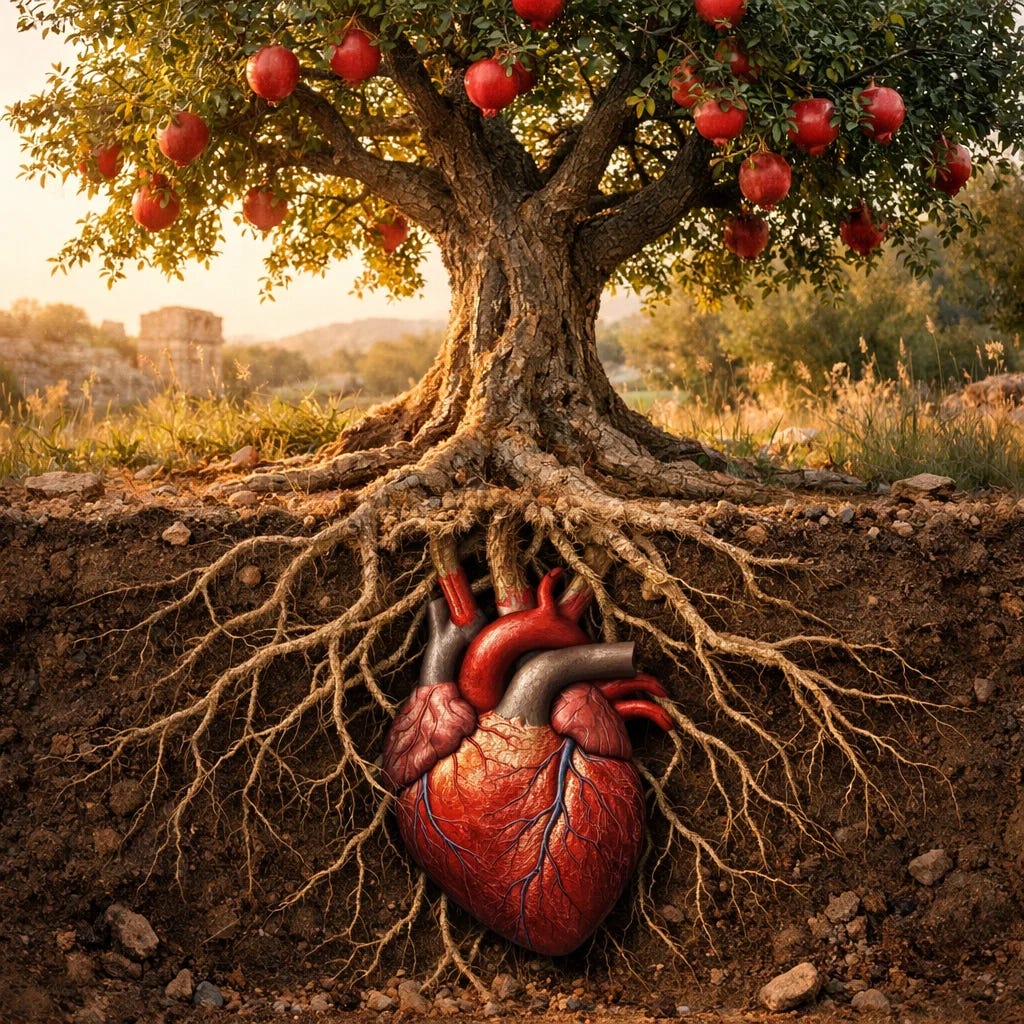
Twenty years ago, a study was published that should have changed cardiology forever.
It didn’t.
Not because the data were weak. Not because the methodology was flawed. Not because anyone refuted it. The study simply... disappeared. Slipped beneath the waters of medical discourse like a stone that made no ripple.
What the Study Actually Showed
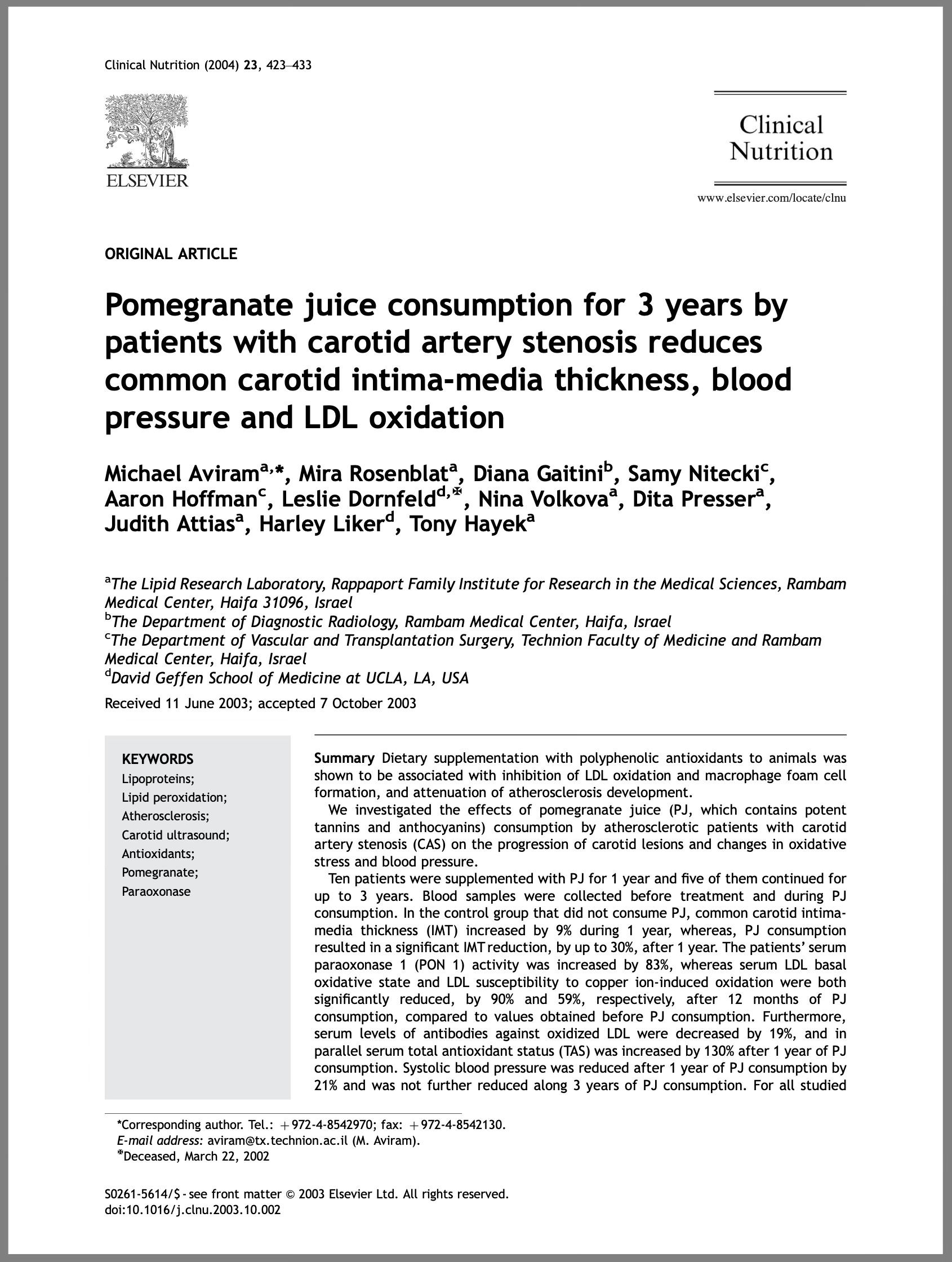
In 2004, Michael Aviram and colleagues at the Technion Institute in Israel published a human clinical trial in Clinical Nutrition. The title was dry, as scientific titles tend to be: “Pomegranate juice consumption for 3 years by patients with carotid artery stenosis reduces common carotid intima-media thickness, blood pressure and LDL oxidation.”
But what lay beneath that clinical prose was anything but dry.
The researchers took patients with severe carotid artery stenosis—70 to 90 percent blockage, the kind that puts you on the short list for stroke. These weren’t worried-well health optimizers. They were elderly patients, 65 to 75 years old, with arteries already narrowed to a whisper.
The study design was straightforward: nineteen patients total, divided into a pomegranate group (ten patients) and a control group (nine patients). Five of the pomegranate patients continued the protocol for a full three years. Both groups were matched for age, blood pressure, lipid profiles, glucose levels, and medication use. Same baseline. Same standard care. One variable changed.
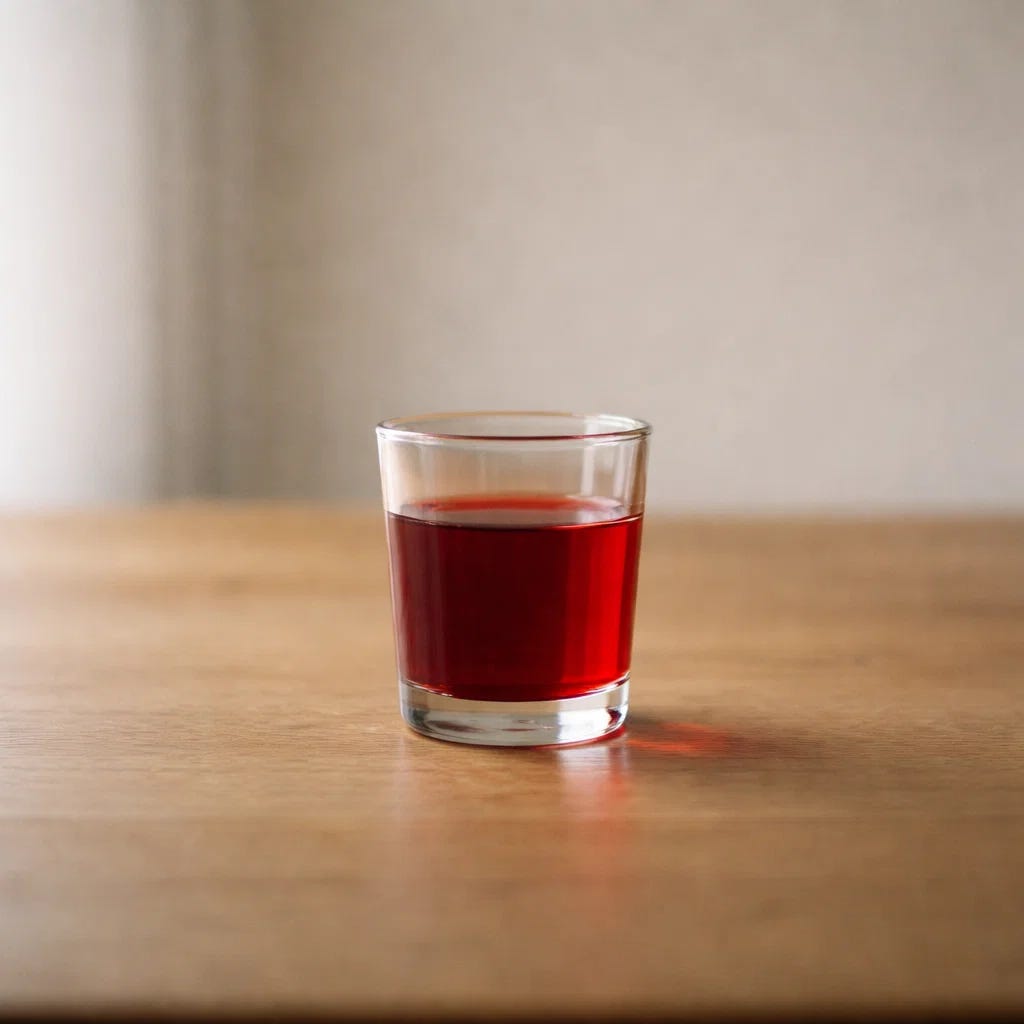
The intervention was almost absurdly modest: roughly 50 milliliters of pomegranate juice daily—about what you’d pour into a small juice glass. The juice was standardized and potent, containing 0.35 mmol total polyphenols per day, predominantly punicalagins and other hydrolyzable tannins.
What happened next defies everything we’ve been told about the irreversible march of cardiovascular disease.
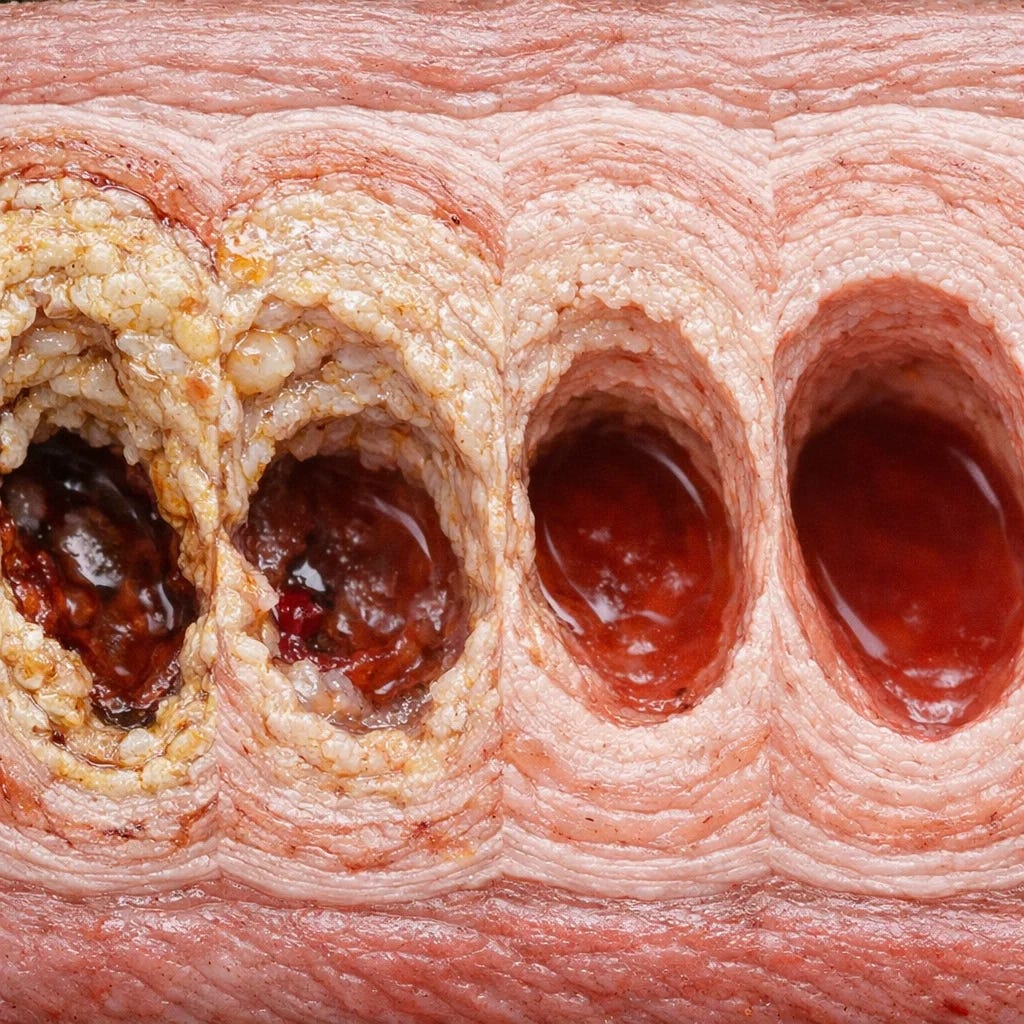
The researchers measured common carotid intima-media thickness—IMT, the standard ultrasound metric for arterial wall thickening and early atherosclerosis—at baseline and then at three, six, nine, and twelve months. In the pomegranate group, mean IMT at baseline was 1.5 mm. What they observed over the following year was a progressive, stepwise regression:
At three months: 13% reduction in IMT.
At six months: 22% reduction.
At nine months: 26% reduction.
At twelve months: up to 35% reduction—with mean IMT dropping from 1.5 mm to 1.1 mm.
The control group, receiving identical standard cardiac care without pomegranate juice? Their mean IMT increased by 9% over the same twelve-month period—from 1.45 mm to 1.58 mm.
Read that again. One group reversed. The other progressed. Divergent trajectories from matched starting points. The only variable was a food.
The Numbers That Should Have Made Headlines
The IMT reduction alone would have been remarkable. But the biochemical shifts underneath tell a deeper story:
Oxidized LDL—dropped by 90 percent. Not a typo. Ninety.
Paraoxonase-1, an enzyme bound to HDL that actively protects arteries from oxidative damage, increased by 83 percent.
Systolic blood pressure fell by 21 percent.
Total antioxidant status rose by 130 percent.
And for the five patients who continued drinking the juice for three years? The benefits held. Lipid peroxidation continued declining even after the structural changes had plateaued.
This is what genuine physiological reversal looks like. Not symptom suppression. Not risk-factor management. The disease process itself, running backward. And without the many life-threatening side effects associated with blood-thinners, cholesterol lowering drugs (which may weaken the heart), and related pharmaceutical and surgical interventions.
Read the rest. Here is Sayer Ji’s article:

Article #2 by Sayer Ji:
The Pomegranate-Ovary Connection: An Ancient Biological Mystery Examined
Modern Science Vindicates What Ancient Physicians Knew
The real revelation of food-as-medicine isn’t that a single food treats a single condition. That’s pharmaceutical thinking—one molecule, one target, one patent. Nature operates differently. When a food genuinely heals, it heals systemically, touching multiple organs through pathways we’re only beginning to understand.
And nowhere is this more elegantly demonstrated than in the pomegranate.
Cut one open. Notice how the fruit’s chambers radiate outward from a central core—an architecture that mirrors the human heart so precisely that ancient physicians prescribed it for cardiac ailments millennia before the Aviram study proved them right.
But turn that same cross-section at a different angle, and you’ll see something else entirely: hundreds of arils clustered in compartmentalized spaces around a pale central membrane—a structure strikingly reminiscent of an ovary, with follicles at various stages of development.
The visual resemblance is striking—so striking, in fact, that ancient physicians following the doctrine of signatures prescribed pomegranate for female fertility and reproductive health.
The answer, it turns out, involves some of the most exciting discoveries in modern biology: plant-derived extracellular vesicles—tiny membrane-bound messengers that carry bioactive molecules across the seemingly vast evolutionary distance between plant and mammal. These nanoscale communicators may finally explain how a fruit can serve, quite literally, as a “backup ovary.”
The Science Beneath the Symbol
The pomegranate (Punica granatum) containsone of the most remarkable chemical profiles in the plant kingdom. In 1966, researchers Heftmann, Ko, and Bennett made a discovery that would have profound implications: pomegranate seeds contain estrone—not a plant compound that merely resembles estrogen, but the actual mammalian hormone itself, at concentrations of 17 mg per kilogram of dried seed. This represents the highest concentration of estrone found in any plant source.
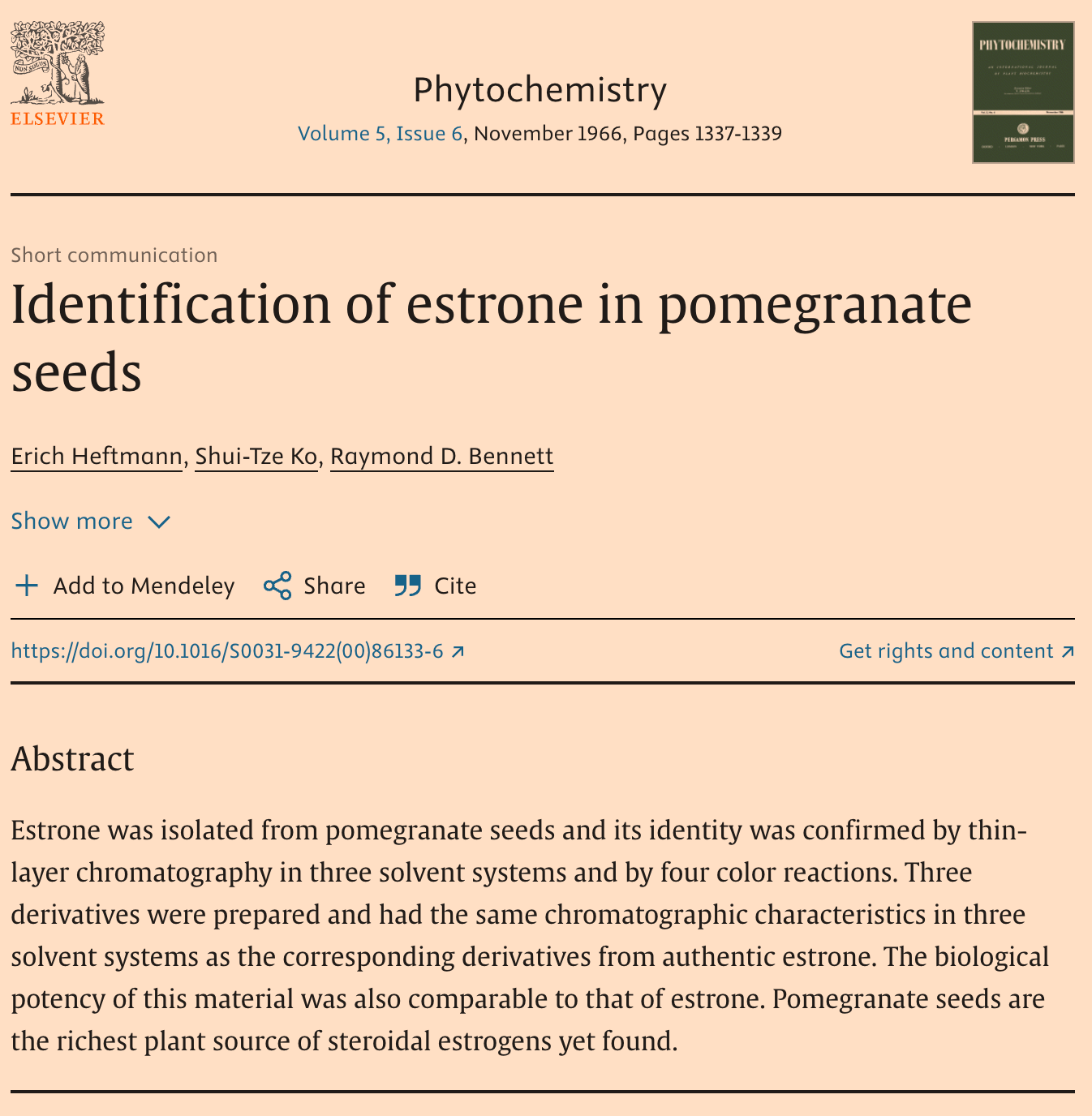
This finding was astonishing. Here was a plant producing the same molecular species used by mammals to orchestrate reproduction, fertility, and female development. Subsequent research revealed that pomegranate seeds also contain testosterone and a rich array of phytoestrogens, including genistein, daidzein, and coumestrol.
And this isn’t merely a chemical curiosity—these hormones appear to be bioavailable and functional. A 2012 study presented at the Society for Endocrinology conference demonstrated that just two weeks of pomegranate juice consumption increased salivary testosterone levels by an average of 24% in both men and women. The same study documented significant improvements in mood, reduced anxiety, and enhanced sense of well-being—effects consistent with optimized hormonal function. The researchers noted that “throughout history, pomegranate symbolizes fertility and has been postulated to enhance function and drive.” Their findings suggest this ancient association has a measurable biochemical basis.
The Ovariectomized Rat Model: Pomegranate as Ovarian Replacement
A 2018 study published in the Journal of Obstetrics and Gynaecology Research by Kaban and colleagues provides remarkable evidence. Researchers removed the ovaries from female rats—eliminating their endogenous estrogen production—then administered pomegranate extract for 90 days.
The results were striking:
Estradiol levels in treated rats rose to 252 ± 43 pg/mL compared to just 154 ± 26 pg/mL in controls—a 64% increase despite the absence of ovarian tissue
Tibial bone cortex thickness increased from 40 ± 2 μm in controls to 58 ± 7 μm in treated animals—reversing the bone loss that characterizes estrogen deficiency
Vaginal epithelium thickness doubled, from 10 ± 4 μm to 21 ± 7 μm—demonstrating that pomegranate’s effects reached reproductive tissues specifically
In other words, pomegranate extract was functioning as a kind of external ovary, providing the body with the estrogenic signals it had lost. The fruit wasn’t merely “supportive” of ovarian function—it was partially replacing it.
Nature’s Selective Estrogen Receptor Modulator
Perhaps most remarkable is how pomegranate exerts its estrogenic effects.Unlike synthetic estrogens or even the body’s own estradiol, pomegranate compounds act as selective estrogen receptor modulators (SERMs)—a pharmacological holy grail that the pharmaceutical industry has spent billions trying to develop.
A 2011 study in the Journal of Nutritional Biochemistry demonstrated this elegantly. When estrogen-dependent breast cancer cells were exposed to pomegranate extracts, the fruit’s compounds blocked estrogen’s cancer-promoting effects. Unlike tamoxifen (the synthetic SERM), pomegranate achieved this without increasing uterine weight—a dangerous side effect associated with pharmaceutical SERMs.

This represents a kind of “molecular intelligence” that defies reductionist pharmacology. Pomegranate compounds appear to:
Increase estrogenic activity when estrogen is deficient (as in menopause)
Block excessive estrogenic activity when estrogen is promoting cancer
Provide beneficial effects to bone, cardiovascular, and reproductive tissues without the risks associated with hormone replacement therapy
How does a fruit achieve what pharmaceutical chemists struggle to accomplish? The answer may lie in a newly discovered communication system that bridges the plant and animal kingdoms.
The Exosome Revolution: Cross-Kingdom Messengers
For decades, we assumed that eating a plant was simply a matter of breaking down its components through digestion—extracting nutrients, discarding waste, and treating plant cells as raw material to be processed. This view is now being radically revised by the discovery of plant-derived extracellular vesicles (EVs), also called exosomes or exosome-like nanoparticles.
These tiny membrane-bound particles, ranging from 30 to 300 nanometers in diameter, are released by plant cells and carry remarkable cargo: proteins, lipids, metabolites, and—crucially—small RNA molecules including microRNAs (miRNAs). Far from being passive nutrition, these vesicles represent active biological communication and may be considered equivalent to packets of biologically indispensable information that transfers like ‘software’ from one organism to another.
Pomegranate Exosomes: First Characterized in 2022
In a groundbreaking 2022 study published in Food & Function, researchers isolated and characterized extracellular vesicles from pomegranate juice (PgEVs) for the first time. Using size exclusion chromatography and advanced imaging techniques, they documented:
A homogeneous population of vesicles with dimensions and structure comparable to other plant-derived EVs
131 distinct proteins identified through proteomic analysis, many related to EV biogenesis and transport
Demonstrated anti-inflammatory, antioxidant, and wound-healing effects on human cell lines
Read the rest of Sayer Ji’s absolutely fascinating article here: sayerji.substack.com/p/the-pomegranate-ovary-connection
That's not all. Pomegranate juice works almost as well as cranberry juice against urinary tract infections. And it doesn't cause diarrhea. Cranberry juice can cause diarrhea. I drink about that amount daily and take D-Mannose and Bay glycerite, and that completely works most of the time, and since I have a kidney stone that provides fuel for UTI, this is a real blessing.
The connection between pomegranate's antioxidants and endothelial membrane integrity is fascinating. The polyphenols likely help stabilize cell membranes in arterial walls, which could explain the reduction in intima-media thickness. It's remarkable how natural compounds can support cellular membrane function where pharmaceutical interventions often fall short. Thanks for highlighting this overlooked research!