
The Great Birth Control Deception: What Decades of Lies Have Cost Women - and Society
Your life, and millions of others, count for nothing compared to PHARMA’S bottom line and the greater agenda.

BS”D
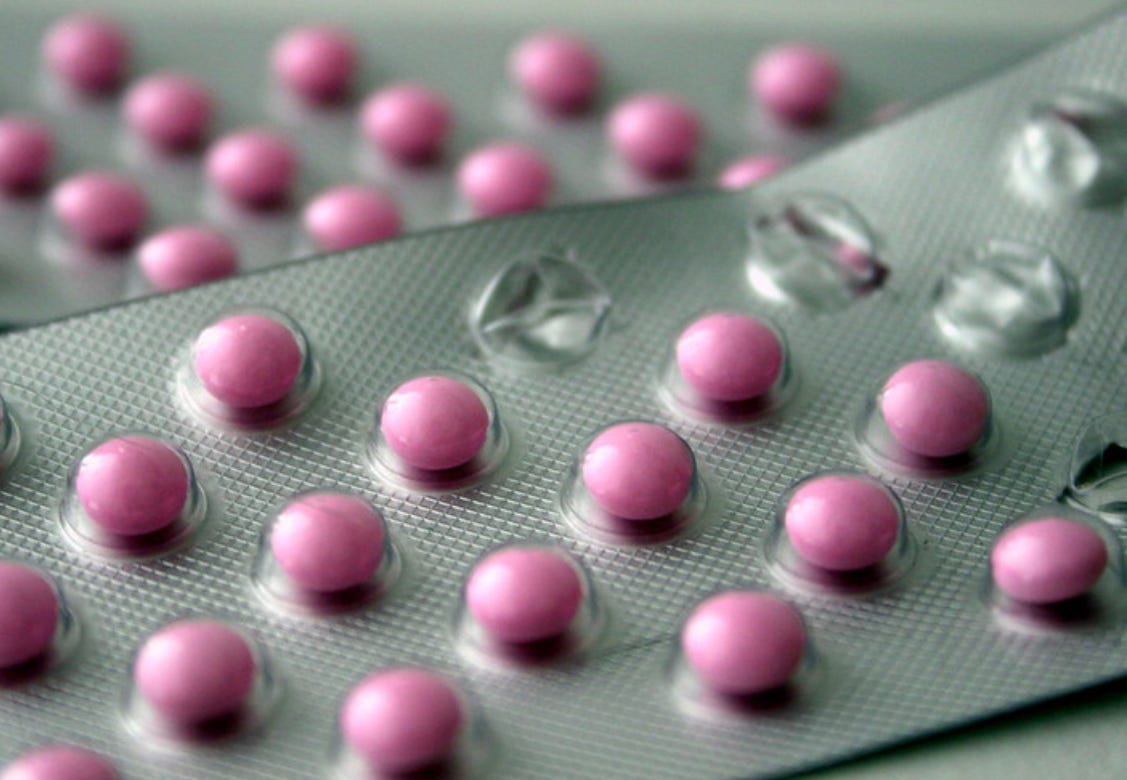
Too many women and girls know absolutely nothing of the severe physical and emotional health consequences that frequently occur from use of the birth control pill and other forms of synthetic hormones, such as those in the Nuva Ring and the IUDs. Lives and relationships are destroyed on a daily basis, with many people not even understanding what happened to themselves or their spouses. Even if a woman does suspect that the hormones she’s using are a factor, doctors and other trusted authorities frequently brush away her concerns as unfounded. Here you will find the information that you need, whether for yourself or to share with those you love. You will also discover the heartbreaking “bigger picture,” of how these artificial interventions have remade society, in the biggest global social engineering experiment ever.
The very important material that immediately follows is the writing of the Substack author who goes by the pen name “Unbekoming.” I’ve put several of his pieces together and abbreviated some of the content. The links to his articles follow them. Of course, you can verify his research yourself by doing your own.
Below Unbekoming’s work, you will find a program I did in 2023 on this same topic.
By Unbekoming:
When Sarah Hill went off the birth control pill after a decade of daily use, she expected her body to return to its natural state—like stepping out of a costume she’d been wearing. Instead, she discovered she’d been living as a different person entirely. The psychology researcher found herself experiencing emotions she’d forgotten existed, and suddenly passionate about music she hadn’t cared about in years. Her investigation into what had happened to her would reveal that the pill doesn’t just prevent pregnancy—it fundamentally rewires the brain, alters who women are attracted to, changes their stress responses to resemble those of trauma victims, and may even influence whether their future relationships succeed or fail. Yet most women taking hormonal contraceptives have no idea they’re chemically restructuring their personalities, their desires, and potentially their entire futures.
Hill’s research uncovered something that should have been front-page news: women on the pill have stress responses that mirror those of people with PTSD, their hippocampi shrink like those of depression sufferers, and they’re attracted to different types of men than when cycling naturally. Danish studies tracking millions of women found that teenagers on the pill showed 80% higher depression risk and triple the suicide risk. Women who chose their spouses while on hormonal contraceptives were more likely to initiate divorce when they stopped taking them, suddenly finding themselves unattracted to men they’d married. The pill changes which genes are expressed throughout the body, alters the gut microbiome, and may contribute to the epidemic of autoimmune diseases that disproportionately affects women. These aren’t rare side effects—they’re fundamental changes to how the brain and body function, affecting millions of women who were never told that their daily pill was doing anything beyond preventing pregnancy.
The Experiment Begins
The narrative we’ve inherited about birth control reads like a fairy tale: Margaret Sanger and Katharine McCormick, crusading for women’s freedom, funded the development of a “magic pill” that would liberate women from the burden of unwanted pregnancies. Finally, we’re told, women could pursue education and careers without fear. But the real story, buried in government documents and foundation archives, tells a different tale. The Rockefeller family, who had funded eugenics programs since the 1920s, poured millions into birth control research. By 1974, Henry Kissinger’s National Security Study Memorandum 200 explicitly identified population growth in developing nations as a threat to U.S. resources, recommending the promotion of contraception and the elevation of women’s status—not for women’s benefit, but to reduce birth rates.
Today, one in four women taking hormonal contraceptives is prescribed antidepressants. Women on the pill face double the risk of suicide attempts and triple the risk of completed suicide compared to those who never used hormonal contraception. These aren’t fringe findings from questionable sources—they’re the results of massive studies involving hundreds of thousands of women, published in leading medical journals. Yet how many women are informed of these risks when handed that first prescription at thirteen, fifteen, or eighteen years old?
The birth control pill promised to separate (marriage) from reproduction, but it has accomplished something far more profound: it has separated women from their own bodies, their natural cycles, and increasingly, from the very possibility of motherhood. What began as a tool for family planning has become a requirement for participation in modern life, prescribed to girls barely into their teens for everything from acne to painful periods, creating a generation of women who spend their most fertile years chemically sterile, only to discover when they finally want children that their window has closed.
This essay will take you on a journey through the hidden history of hormonal contraception—from its eugenicist origins to its current role in what some researchers now call “unplanned childlessness.” We’ll examine how birth control became embedded in our education system through shock tactics and peer pressure documented in Department of Education hearings. We’ll explore the mounting evidence linking the pill to depression, anxiety, and even changes in spousal selection that may be contributing to our epidemic of divorce. And we’ll confront the uncomfortable truth about how the pharmaceutical industry, government agencies, and even feminist organizations have worked together to normalize the daily consumption of synthetic hormones by healthy young women.
But this isn’t just a story about the past. It’s about the present reality facing millions of women who are only now beginning to question why they feel angry on the pill, why their libido vanishes, why they’re attracted to different types of men when taking hormones versus not. It’s about young women today who are taught that their natural fertility is a disease to be treated, their periods a monthly curse to be suppressed, their ability to create life an inconvenience to be managed. Most urgently, it’s about ensuring that the next generation of women can make truly informed choices about their bodies, their health, and their futures.
The Architects of Control
The story of birth control begins not with women’s liberation, but with population control. In the early 1900s, Margaret Sanger partnered with eugenicists who saw contraception as a tool for reducing “undesirable” populations. The Rockefeller Foundation, which had donated over $400,000 to eugenics research by 1926 (nearly $7 million in today’s dollars), became a major funder of Sanger’s work. These weren’t progressive heroes fighting for women’s rights—they were social engineers with a vision for reshaping humanity itself.
The most damning evidence comes from recently declassified government documents. In 1974, at the height of the women’s liberation movement, Henry Kissinger authored National Security Study Memorandum 200, which became official U.S. policy under President Ford. This document explicitly stated that population growth in developing countries threatened U.S. access to minerals and resources. Among its recommendations: promoting women’s education and workforce participation, not as goods in themselves, but as the most effective means of preventing births. The memo identified thirteen nations for targeted population reduction, recommending that efforts be disguised to avoid appearing as “a form of economic or racial imperialism.”
John D. Rockefeller III, who founded the Population Council in 1952, pushed this agenda even further. The Population Council promoted contraception worldwide, but internal documents reveal their true motivation wasn’t women’s health but resource control. As I’ve noted, “The oligarchs understood what took feminists decades to admit: educated, working women have fewer children.” The alignment was perfect—population controllers wanted fewer births, corporations wanted cheap female labor, and feminists wanted women in the workforce. The birth control pill became the tool that satisfied all three agendas while being marketed solely as female liberation.
Manufacturing Consent in the Classroom
By the 1970s, with the birth control pill approved and the Department of Education newly established, the campaign to normalize hormonal contraception moved into schools. What happened next, documented in congressional hearings and exposed by economist Thomas Sowell, reveals a systematic program of psychological manipulation.
The tactics used to reshape young minds followed classic brainwashing techniques. Teachers would shock students by forcing them to view graphic content. They isolated those with traditional values through peer pressure, humiliating those who disagreed. One documented case involved a teacher calling on a student named John up to 23 times per class to defend his beliefs, while orchestrating his classmates to argue against him. The message was clear: traditional values were abnormal, backward, and shameful.
Most insidiously, pharmaceutical companies were directly involved in creating these curricula. As Candace Owens discovered through Thomas Sowell’s research, these companies viewed schools as having a ‘captive audience’ of more than 40 million school children. They provided “educational materials” promoting their products to captive audiences of millions of schoolchildren. Teachers were sent on retreats and conferences funded by these same companies, returning with lesson plans that normalized daily hormone use for teenage girls. By 1979, the U.S. Department of Health was distributing questionnaires asking children about their habits and activities—not to gather health data, but to desensitize them to (adult) content and make birth control seem like a natural, necessary part of growing up.
The Chemical Revolution in Women’s Bodies
What exactly happens when a young woman starts taking birth control? The pill works by tricking the body into believing it’s already pregnant, flooding it with synthetic hormones that shut down natural ovulation. But the effects go far beyond preventing pregnancy. Research shows that hormonal contraceptives fundamentally alter brain chemistry, affecting everything from mood to memory to mate selection. Women on the pill show altered stress responses, with their bodies producing different amounts of cortisol—the stress hormone—compared to naturally cycling women.
The psychological effects are staggering. A massive Danish study tracking nearly half a million women found that those on hormonal contraceptives had a 70% higher risk of depression compared to non-users. For teenagers, the risk was even higher—adolescent girls on the pill were 80% more likely to be prescribed antidepressants. But depression is just the beginning. The same researchers found that pill users had double the risk of suicide attempts and triple the risk of completed suicide. The risk was highest in the first two months of use—exactly when many young women are most vulnerable and least likely to connect their emotional changes to their new prescription.
Perhaps most disturbing are the effects on partner selection. Multiple studies have confirmed that women on the pill are attracted to different types of men than when they’re cycling naturally. The pill reverses normal mate preferences, causing women to prefer men with similar immune system markers—the opposite of natural attraction, which drives us toward genetic diversity. Women who meet their partners while on the pill often experience a shocking change in attraction when they stop taking it. As one researcher noted, “We’re conducting a massive experiment on human bonding, and we have no idea what the long-term consequences will be.”
The Fertility Trap
The cruel irony of birth control is that it often prevents women from having the children they eventually desperately want. Women are told they can delay childbearing indefinitely, that fertility is simply a switch they can flip on when ready. But the reality is starkly different. Female fertility begins declining at 27, more sharply after 30, and dramatically after 35. Yet the average age of first birth has been pushed later and later, with many women not attempting pregnancy until their thirties or even forties. The result is an epidemic of what researchers call “unplanned childlessness”—women who always intended to have children but aged out of their fertility window while building careers or waiting for stability.
The Hidden Cancer Connection
While women are warned about the pill’s minor side effects—weight gain, mood changes, spotting—the cancer risks are rarely discussed with the gravity they deserve. The science is clear but uncomfortable: women who use oral contraceptives have a 24% increased risk of breast cancer while taking them. The risk is highest for those who start young and use them long-term. For women with a family history of breast or ovarian cancer, one study found the risk could be up to 11 times higher. Yet how many teenage girls prescribed the pill for acne are informed they’re potentially trading clear skin for increased cancer risk?
The Feminist Paradox
The birth control pill’s relationship with feminism represents one of history’s great ironies. Sold as the key to women’s liberation, it instead became what Marxist feminist Nancy Fraser admits was “capitalism’s handmaiden.” The pill enabled the destruction of the family wage—where one income could support a household—by flooding the labor market with women. When you double the workforce, you halve its value. What was sold as the choice to work became the necessity to work, with families now requiring two incomes to achieve what one provided in the 1960s.
The feminist movement’s embrace of the pill aligned perfectly with corporate interests in suppressing wages and government interests in population control. As researcher Janice Fiamengo documents, feminism “delivered exactly what it claimed to oppose: women reduced to their economic function, valued only for productivity, their worth measured in GDP contribution rather than human connection.” The pill didn’t free women from biology—it chained them to a different master, trading the rhythms of their own bodies for the demands of corporate schedules that never pause for fertility, pregnancy, or nursing.
Most perversely, modern feminism has taught women to view their own bodies as the enemy. Natural fertility is reframed as a burden, periods as a curse, the ability to create life as an inconvenience to be chemically suppressed. Young women learn to fear their own biology while embracing synthetic hormones that disconnect them from their natural cycles. The same movement that claims to empower women has convinced them that their greatest power—the ability to create and nurture life—is actually their greatest weakness. This isn’t liberation; it’s the internalization of a profoundly anti-woman ideology that benefits everyone except women themselves.
The Assault on Female Biology
Beyond the pill itself lies a broader chemical assault on women’s fertility that researchers are only beginning to understand. We live in what some scientists call an “endocrine-disrupting soup”—surrounded by chemicals that interfere with our hormonal systems. BPA in plastics mimics estrogen in the body. Phthalates in personal care products disrupt hormone production. Pesticides like atrazine feminize male frogs and may be having similar effects on humans. Fluoride in drinking water affects thyroid function, which is crucial for fertility. These chemicals are everywhere—in our food packaging, cosmetics, cleaning products, and water supply.
The birth control pill adds another layer to this toxic burden. While women’s bodies are already struggling to maintain hormonal balance in a poisoned environment, we add daily doses of synthetic hormones that shut down natural cycling. The combination may be catastrophic for long-term fertility. Some researchers theorize that the rising rates of PCOS, endometriosis, and unexplained infertility are linked to this chemical assault on the endocrine system. Women who’ve been on the pill since their teens, living in urban environments full of endocrine disruptors, eating processed foods wrapped in plastic, may find their bodies unable to conceive when they finally try.
Even more troubling is evidence that these chemicals may be damaging the maternal instinct itself. The complex hormonal cascade that creates the drive to nurture and protect offspring can be disrupted by endocrine-interfering chemicals. Oxytocin, the bonding hormone; prolactin, which promotes nurturing behaviors; the intricate dance of estrogen and progesterone that prepares a woman’s body and mind for motherhood—all can be affected by chemical exposure. We may be creating a generation of women whose bodies are not only less capable of bearing children but whose brains are less primed to want them in the first place.
The Male Crisis Hidden in Plain Sight
While we focus on women’s experiences with birth control, we’ve ignored how the pill fundamentally altered relationships between the genders. The promise was that reliable contraception would improve marriages by removing the fear of unwanted pregnancy. Instead, we’ve seen marriage rates plummet, divorce rates soar, and a growing mutual hostility between men and women.
Breaking the Spell
The first step to reclaiming our health and fertility is recognizing that we’ve been sold a lie. The birth control pill wasn’t developed for women’s benefit but for population control. It wasn’t tested adequately for long-term safety but rushed to market to serve ideological and economic agendas. The education system that normalized it used documented manipulation tactics to overcome our natural resistance to daily hormone consumption. Young women aren’t given informed consent—they’re given one-sided propaganda that ignores serious risks while exaggerating benefits.
True informed consent would require doctors to explain that the pill doubles suicide risk, that it may permanently alter brain chemistry, that it could affect future fertility, that it changes who women are attracted to, that it increases some cancer risks while decreasing others. It would require acknowledging that we don’t fully understand the long-term consequences of suppressing natural hormonal cycles for decades. It would mean admitting that many women prescribed the pill for acne or cramps are taking on serious health risks for conditions that might resolve naturally or be treated with less dangerous interventions.
Most importantly, breaking the spell means recognizing that our bodies aren’t broken. Painful periods, acne, PMS—these aren’t diseases requiring lifelong pharmaceutical intervention but often symptoms of underlying imbalances that can be addressed through nutrition, lifestyle changes, and treating our bodies with respect rather than as inconveniences to be chemically controlled. We need to rediscover what health looks like without synthetic hormones, what natural cycles feel like, what it means to be fully present in our bodies rather than numbed to their rhythms.
The Path Forward
So where do we go from here? First, we must demand truly informed consent. Every woman considering hormonal contraception deserves to know the full range of risks—not just the mild side effects but the serious psychological and physical consequences documented in peer-reviewed research. We need doctors who will take women’s concerns seriously rather than dismissing pill-induced depression or anxiety as unrelated to medication.
Second, we must address the broader assault on fertility. This means pushing for stricter regulation of endocrine-disrupting chemicals, supporting organic agriculture that doesn’t poison our food supply, and creating awareness about environmental toxins that affect reproductive health. It means questioning why fertility problems are treated as individual medical issues rather than recognizing them as symptoms of a poisoned environment and a toxic culture that has taught women to delay childbearing past their biological prime.
Finally, we must reclaim the narrative around women’s bodies and fertility. Being able to create life isn’t a burden to be suppressed but a profound power that connects us to the continuous chain of humanity. Women’s cycles aren’t inconveniences but sources of insight, creativity, and connection to natural rhythms. Motherhood isn’t a career-limiting detour but for many women the most meaningful work they’ll ever do. A woman’s capacity for creation is a gift, not a curse.
Essential Questions to Ask When a Doctor Recommends Birth Control Pills
Top 10 Must-Ask Questions
“What are the depression and suicide statistics for girls my age on the pill?”(Studies show 70% higher depression risk, double the suicide attempt rate)
“Can you explain the breast cancer risk increase and why I should accept that for acne/cramps?” (24% increased risk while taking it)
“What are ALL the non-hormonal alternatives for my condition?” (Force them to think beyond their default prescription)
“If the pill didn’t exist, how would you treat this?” (Reveals whether hormones are truly necessary)
“How might taking synthetic hormones during my teens affect my future fertility?” (Many women struggle with “unplanned childlessness” after years on the pill)
“Will you document in writing that you’ve informed me of mental health risks?”(Creates accountability)
“What percentage of your patients stop due to side effects, and why?” (Reveals real-world experience vs. marketing claims)
“Should we try dietary changes or supplements first?” (Many conditions resolve with nutrition/lifestyle changes)
“How is this different from giving teenage boys daily steroids?” (Highlights the double standard)
“Can I have studies showing long-term safety in teenagers specifically?” (Often these don’t exist or show concerning results)
Red Flag Responses:
“It’s completely safe”
“Everyone takes it”
“Those risks are overblown”
“You’re overthinking this”
The follow-up article: Readers responded with their experiences:
Unbekoming: When I published “The Birth Control Deception: What 60 Years of Lies Cost Women,” I expected pushback. What I didn’t expect was the flood of personal testimonies that followed—many readers sharing experiences that no medical study has captured.
This follow-up piece compiles and examines these testimonies. While I’ve woven in insights from my recent treatise on feminism to show how birth control serves the same anti-human agenda, the heart of this work remains the readers’ own words and experiences.
The Birth Control Deception: What Readers Revealed
The statistics I’d compiled—70% higher depression risk, doubled suicide attempts, altered brain chemistry—transformed into human faces through readers’ testimonies. Real women describing strokes at 21, producing milk without pregnancy, developing diabetes within weeks of starting the pill. Real men watching wives transform into strangers. One nurse reporting eight of ten colleagues with unexplained infertility.
These weren’t just individual tragedies but patterns revealing systematic harm. What emerged was a collective testimony more damning than any study—because these stories reveal not just what the pill does to bodies, but what it does to souls, relationships, and entire societies.
Physical Harm: Beyond the Studies
The research I’d compiled showed increased cancer risk, blood clots, and stroke. But readers’ stories went further. One nearly died from a DVT after three months on the pill at 21. Another started producing breast milk in college—no pregnancy, just confused hormones. A woman developed Type 1 diabetes within six weeks of starting the pill.
A nurse reported that eight of ten colleagues had unexplained infertility. Another traced four miscarriages to hormone depletion from years on the pill. Several readers raised something I hadn’t covered—the candida connection. The pill creates conditions where fungal infections thrive, and some alternative practitioners now link chronic candida to various cancers. Women aren’t just accepting cancer risk for clearer skin—they may be creating the conditions for cancer through multiple pathways.
The poly-pharma danger also emerged from comments. Birth control plus antidepressants plus ADHD medications—young women on chemical cocktails no one has studied long-term. As one reader pointed out, we’d be horrified at giving teenage boys daily steroids, yet we accept giving teenage girls daily hormones. The only difference is which serves the agenda.
But there’s a darker pattern at work here. This pattern of invisible female harm extends beyond individual health. As I documented in my analysis of feminism’s sanctioning of female violence, society permits the ultimate brutality—women killing full-term babies for “psychosocial reasons.” The same system that allows mothers to abort healthy babies at 37 weeks dismisses birth control’s violence against women’s bodies as minor “side effects.” The readers’ testimonies about strokes, blood clots, and permanent damage represent the same pattern: when women harm or are harmed in service of the agenda, their suffering doesn’t register as real.
Psychological Damage: More Than Depression
The 70% higher depression risk I’d cited from Danish studies became human through readers’ stories. Women described decades lost to depression they never connected to that daily pill. Many were prescribed antidepressants to manage pill-induced depression, creating what one reader called “poly-pharma” dangers—layers of medication no one has studied together.
Candace Owens’ experience, which I’d referenced, resonated with many. She’d stopped the pill after weeks when it made her so irrationally angry she wanted to “physically assault” someone. She recognized this wasn’t her true self. But countless women spent years wondering why they felt like strangers in their own minds, never making the connection.
The teenage statistics are particularly haunting—adolescent girls on the pill were 80% more likely to be prescribed antidepressants. Readers shared their daughters’ stories: girls given the pill for acne or cramps, then sliding into depression, anxiety, suicidal thoughts. Parents watching their daughters transform, not knowing the little pink pill was responsible.
Relationship Destruction: The Stories Behind the Science
Research shows the pill alters partner selection at a biological level, causing women to be attracted to men they wouldn’t naturally choose. Readers confirmed this with devastating personal accounts. Women who met partners while on the pill, married them, had children, then stopped the pill only to realize they felt no attraction. Marriages built on false chemical attraction crumbling when natural hormones returned.
Men’s perspectives, rarely heard in birth control discussions, revealed equal devastation. They described wives transforming—loving women becoming angry, warm women becoming frigid, stable women becoming suicidal.
This chemical disruption of natural attraction compounds what feminism has already accomplished ideologically. As I’ve written, feminism systematically destroyed trust between the genders, teaching women to see men as enemies rather than partners. The pill adds a biological layer to this poisoning—women literally cannot feel proper attraction to men while on synthetic hormones. The oligarchic bargain is complete: feminism separated women from men psychologically, while birth control separates them chemically. No wonder marriages built on this double deception crumble when women’s natural hormones return.
Rising IUD (intrauterine device) rates among young women represent the next phase. Having failed to hook the current generation on daily pills, the industry pushes these devices—small objects inserted into the uterus that pump synthetic hormones continuously for years. Readers reported battling doctors for removal of the Mirena IUD (a hormonal version) after severe side effects doctors insisted were “impossible.”
Fertility Theft: The Cruelest Deception
Readers’ fertility struggles illustrated what researchers call “unplanned childlessness.” Women shared spending their twenties and thirties on the pill, assured they could have children “when ready.” Then discovering at 35, 38, 40 that their window had closed. One took the pill for 17 years before struggling to conceive. She was lucky—pregnancy came after three months. Many weren’t.
Several readers connected dots I’d missed. The same industry that profits from preventing conception profits from treating infertility. IVF becomes necessary after pill-induced fertility problems. As one reader summarized: “BCP coupled with toxins = no fertility. Antidepressants for sterile mom to be. Then: IVF becomes the next cash cow. After which: cancer.”
The bitter irony, as Nancy Fraser admitted, is that feminism became “capitalism’s handmaiden.” The pill enabled exactly what the oligarchs wanted: women reduced to their economic function, valued only for productivity, their worth measured in GDP contribution rather than human connection. When you double the labor force, you halve its value. The “liberation” to work became the obligation to work, with mothers now paying strangers to raise the children they managed to have despite the chemical assault on their fertility.
One nurse reported that among her specific group of colleagues, eight out of ten experienced unexplained infertility. While this is just one workplace sample, it raises questions—these were medical professionals, presumably health-conscious and informed. If such high rates appear even among nurses, what might be happening more broadly?
The Spiritual Dimension: A Battle Readers Recognized
Many readers saw this as spiritual warfare. Multiple comments identified birth control as an attack on God’s design for families. One cited Psalm 127:3—children are a gift from God. Of course those who hate humanity would create tools to refuse that gift.
The spiritual attack goes deep. One reader referenced “The 1916 Project” documentary, tracing efforts to destroy the nuclear family back over a century. Long before the pill, forces worked to reduce humanity to economic units. The pill became their perfect weapon—voluntary sterilization embraced as freedom.
As I explored in my treatise on feminism, the oligarchic-feminist alliance against the family has deep roots. In 1974, Henry Kissinger’s NSSM 200 explicitly promoted birth control as a tool of empire, identifying “raising the status of women” as essential to reducing birth rates. The document wasn’t concerned with women’s wellbeing but with their utility in suppressing population. The oligarchs understood what took feminists decades to admit: educated, working women have fewer children. The pill became their perfect weapon—voluntary sterilization embraced as freedom, accomplishing what Soviet communism could not: the willing destruction of fertility by those who should defend it most fiercely—mothers.
Links to Unbekoming’s articles about the Pill excerpted in this article:
https://unbekoming.substack.com/p/the-birth-control-deception-what
https://unbekoming.substack.com/p/the-birth-control-testimonies
https://unbekoming.substack.com/p/this-is-your-brain-on-birth-control
Unbekoming’s article about recovery from the Pill:
https://unbekoming.substack.com/p/beyond-the-pill-a-30-day-program
Please see the following program I did on the topic of artificial hormones, in August 2023:
When the possible side effects of a product are hidden from a patient, it's blatant medical malpractice and flies directly in the fact of the "informed consent" medicine is SUPPOSED to be built on. The industry pulls stuff like this and then is shocked when trust is broken. Is it truly any wonder that so many people in multiple generations no longer trust the medical industry?
Excellent article! The other thing the pill does is that it increases sex hormone binding globulin which lowers levels of free T3, which causes tissue level hypothyroidism that does not show up with a TSH test. So, many women on the pill have a decreased metabolism, gain weight, have brain fog, depression, poor sleep, and a low libido.